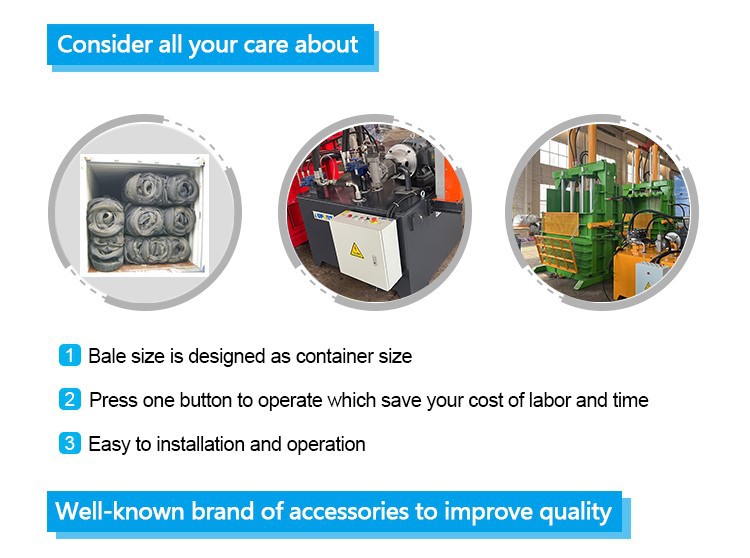
Vertical Scrap Baler Machine: The Smart Solution for Efficient Metal Recycling
In today's recycling industry, improving material handling efficiency and reducing transportation costs are becoming increasingly important. A Vertical Scrap Baler is one of the most practical and cost-effective machines for processing scrap metal, aluminum, steel, copper, iron, and other recyclable materials. With its compact structure, strong compression force, and easy operation, the Vertical hydraulic baler machine has become an essential recycling solution for scrap yards, metal processing plants, manufacturing factories, and waste recycling centers.
What Is a Vertical Scrap Baler?
A Vertical Scrap Baler is a hydraulic compression machine designed to compact loose scrap materials into dense and uniform bales. By reducing the volume of scrap metal, the machine helps businesses save storage space, lower transportation expenses, and improve recycling efficiency.
Compared with traditional manual handling methods, a vertical baler offers higher productivity, safer operation, and better material management. It is widely used for compressing:
Scrap steel
Aluminum cans
Copper wire
Iron scraps
Stainless steel waste
Metal chips
Industrial waste materials
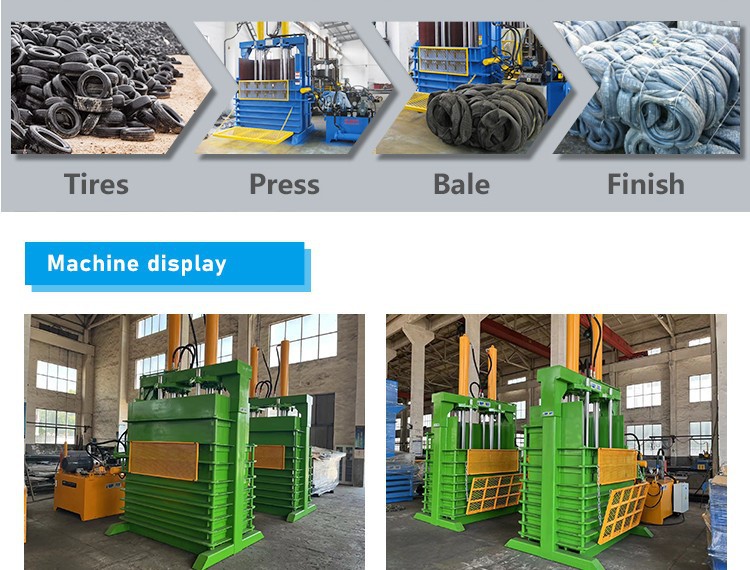
Main Features of Vertical Hydraulic Tire Balers
Strong Hydraulic Compression System
The Vertical Hydraulic Tire Baler machine adopts a high-performance hydraulic system that delivers powerful pressure for compact and dense baling results. The compressed bales are easier to transport and store.
Compact Vertical Structure
The vertical design saves installation space, making it suitable for factories and recycling workshops with limited floor area.
Easy Operation
Most vertical scrap balers feature automatic or semi-automatic control systems, allowing operators to complete the baling process efficiently with minimal labor.
Durable and Heavy-Duty Construction
Made from high-quality steel materials, the machine offers excellent wear resistance and long service life, even under continuous industrial operation.
Energy Saving and Cost Reduction
By reducing scrap volume significantly, businesses can decrease transportation frequency and storage costs while improving overall recycling profits.